PROJECT 01 · PROPOSED PILOT · LEADERSHIP REVIEW

Recovery-Oriented Therapeutic Programming

A proposed interdisciplinary model for introducing, practicing, and reinforcing practical recovery skills throughout the treatment day.

Therapeutic education needs continuity.

Patients benefit when practical recovery skills are introduced clearly, practiced more than once, and reinforced through consistent language. The opportunity is to connect individual teaching moments into a coordinated learning experience supported by nursing, Mental Health Counselors, Social Work, and the interdisciplinary treatment team.

Why it matters

A shared teaching model may improve clarity, continuity, and access to practical skills patients can continue using beyond hospitalization. These potential benefits have not yet been measured.
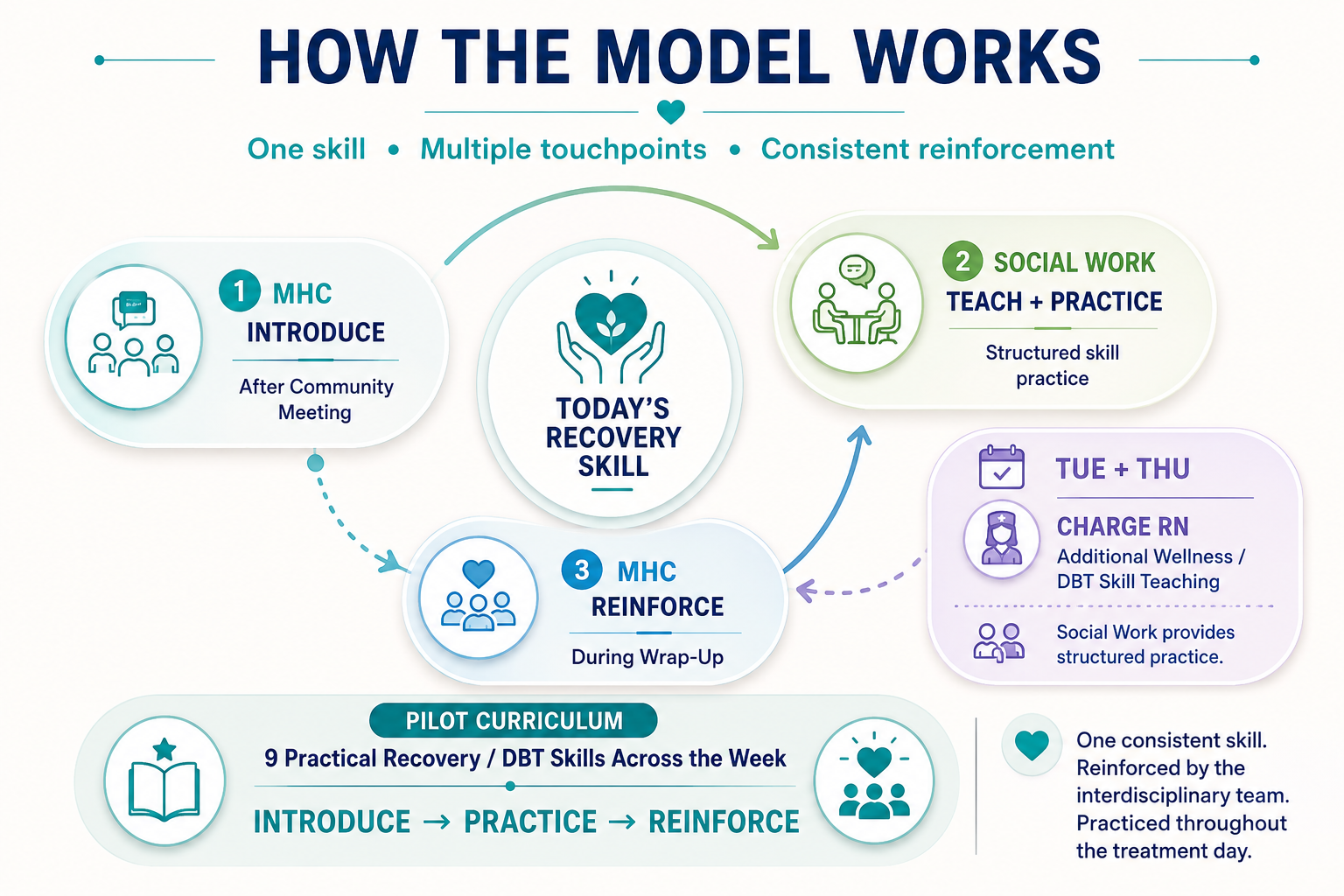
One skill · Multiple touchpoints · Consistent reinforcement

Introduce

A brief morning introduction establishes the Skill of the Day.

Teach & practice

Structured groups and visual materials help patients understand and apply the skill.

Review & reinforce

Wrap-Up connects the skill to reflection, recovery goals, and continued practice.

My contribution / nursing leadership

Designing and organizing the proposed education system: pilot curriculum, infographic-style patient workbooks, Nurse Teaching Cards, facilitator resources, a therapeutic programming calendar, a digital Learning Hub, and a structured evaluation plan.

Preparation and review stage — organizational approval, implementation, and clinical outcomes are not implied.

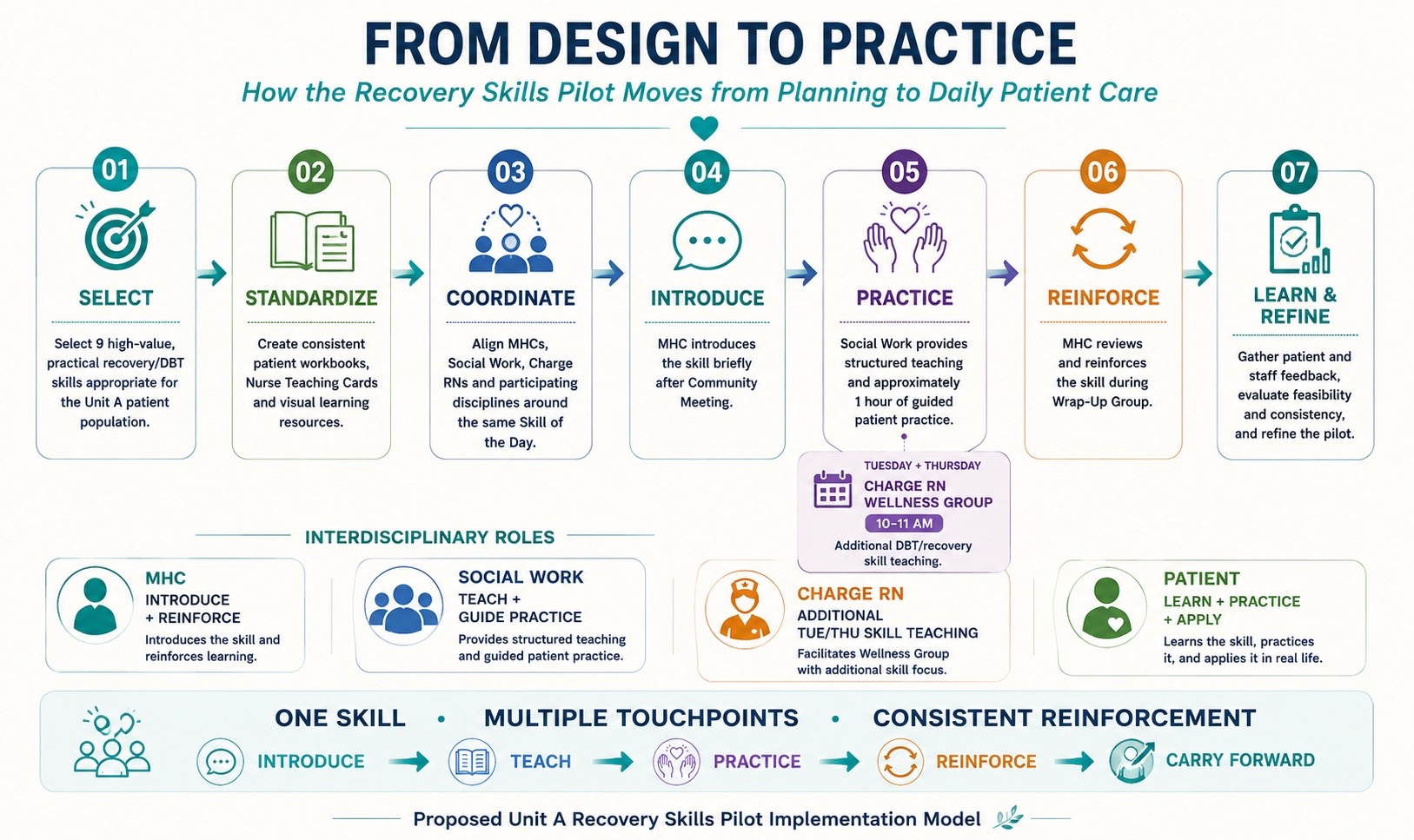
1Select & standardizeChoose practical recovery/DBT-informed skills and prepare consistent learning materials.
2CoordinateReview roles, group timing, language, and workflow with leadership, staff, and the interdisciplinary team.
3PilotBegin only after review, revision, and an agreed limited pilot plan.
4Learn & refineCollect structured feedback and report outcomes only after data are available.

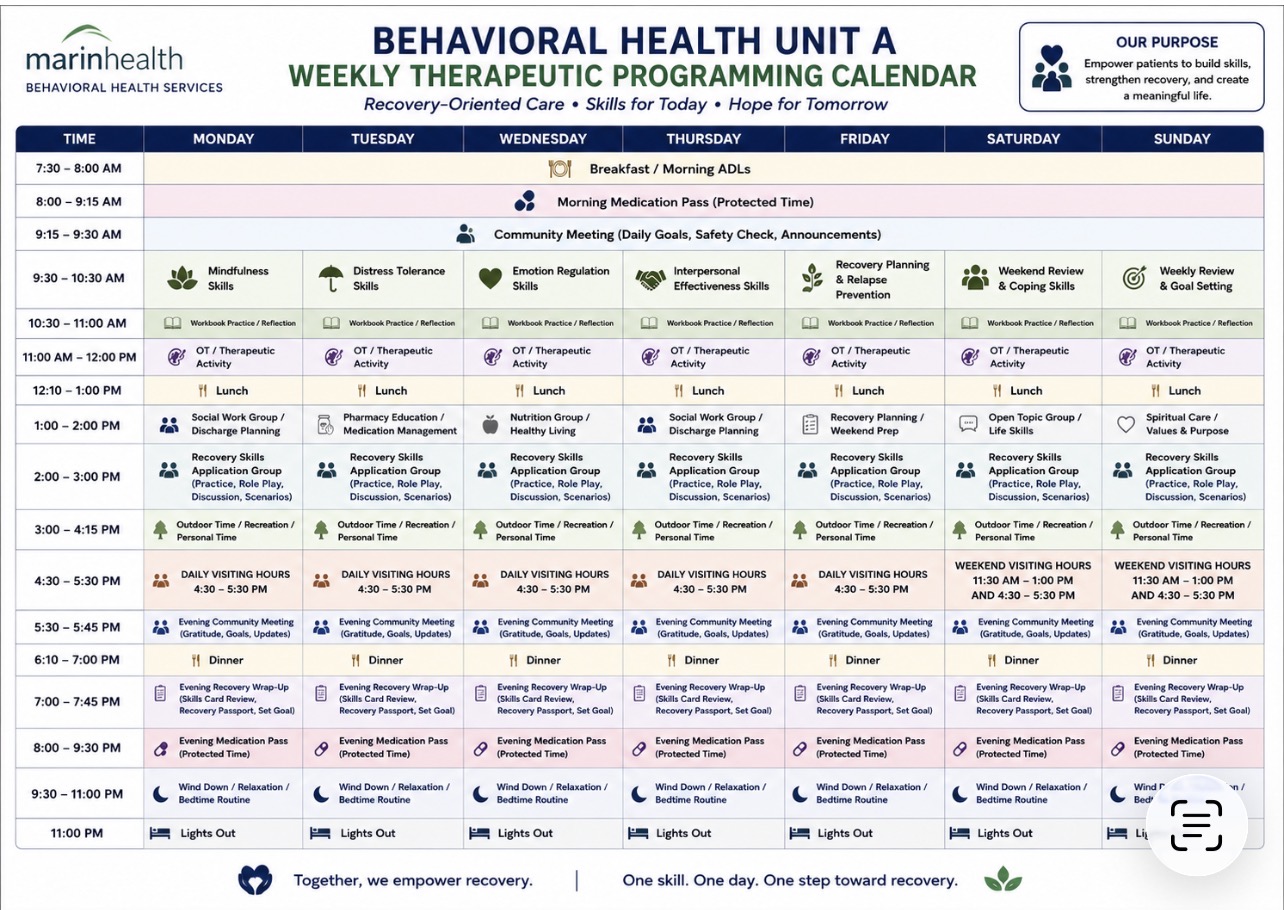
A proposed calendar for collaborative review

The calendar illustrates how recovery skills could be woven into the treatment day. Group names, times, staffing assignments, frequency, and sequencing remain open to revision based on patient needs, staff workflow, operational feasibility, and interdisciplinary treatment-team collaboration.

Reviewer note

This is a program-design proposal, not an approved or operational Unit A schedule.

NEW STAFF TOOL · WORKING PROTOTYPE

Group scheduling app

The app is intended to let staff adjust groups for a single day or a full week, save changes for colleagues to see, and download or print daily and weekly schedules. It is offered for staff and leadership review, not as an approved Unit A schedule. Shared saving and access requirements could not be independently tested from this portfolio.

Explore the group scheduler ↗

The Claude artifact may require sign-in or access permission.

BOARD REVIEW MATERIALS

CBT-Informed Recovery Skills

A seven-day patient education series with structured Meet, Learn, Practice, and Review & Apply activities.

42 A4 pages
7 skills42 pages3 daily touchpoints1 shared teaching model
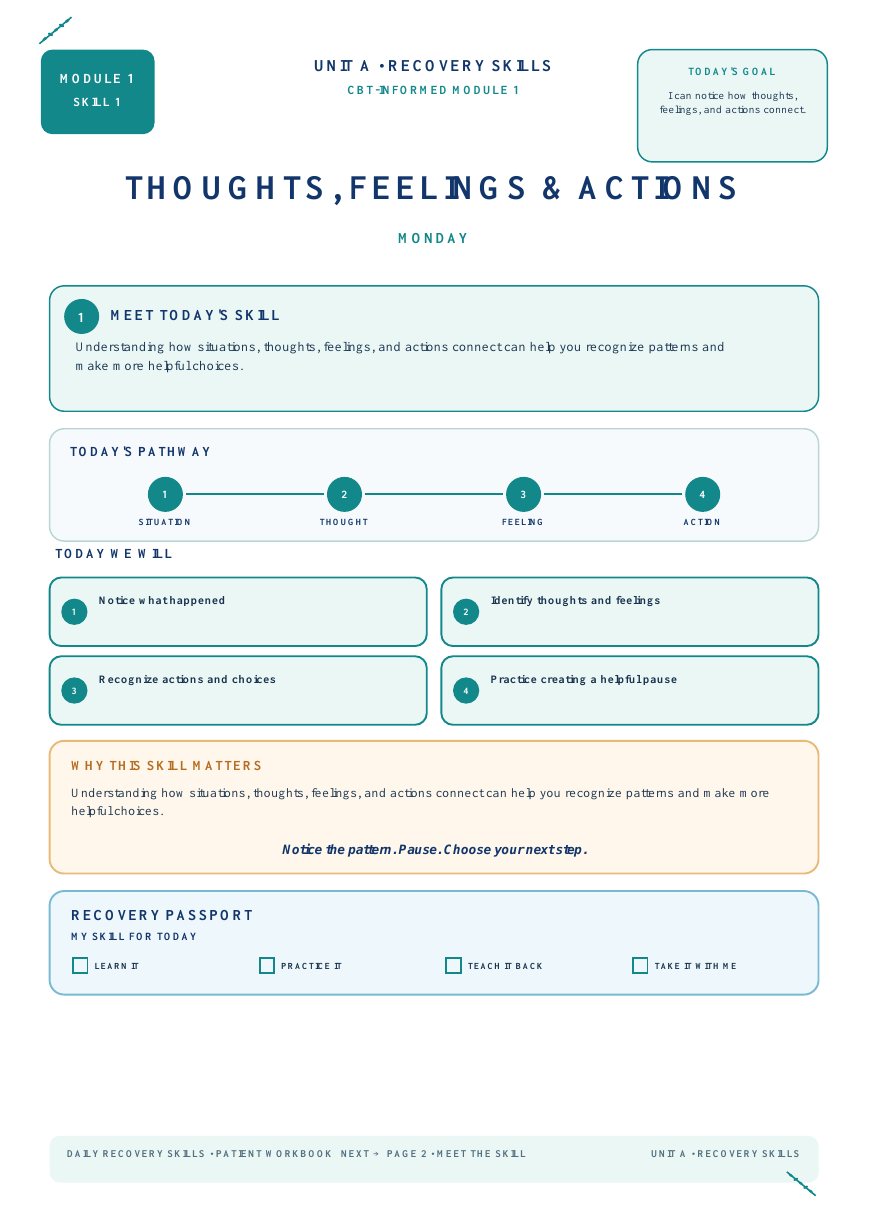
Cover of the Monday CBT-informed Recovery Skills booklet
MONDAY–SUNDAY PATIENT BOOKLET SERIES

Complete Board Review Binder

Seven coordinated six-page booklets, redesigned skill covers, patient worksheets, and a shared Weekly Recovery Passport.

PILOT TEACHING PLAN

CBT Group Teaching Plan

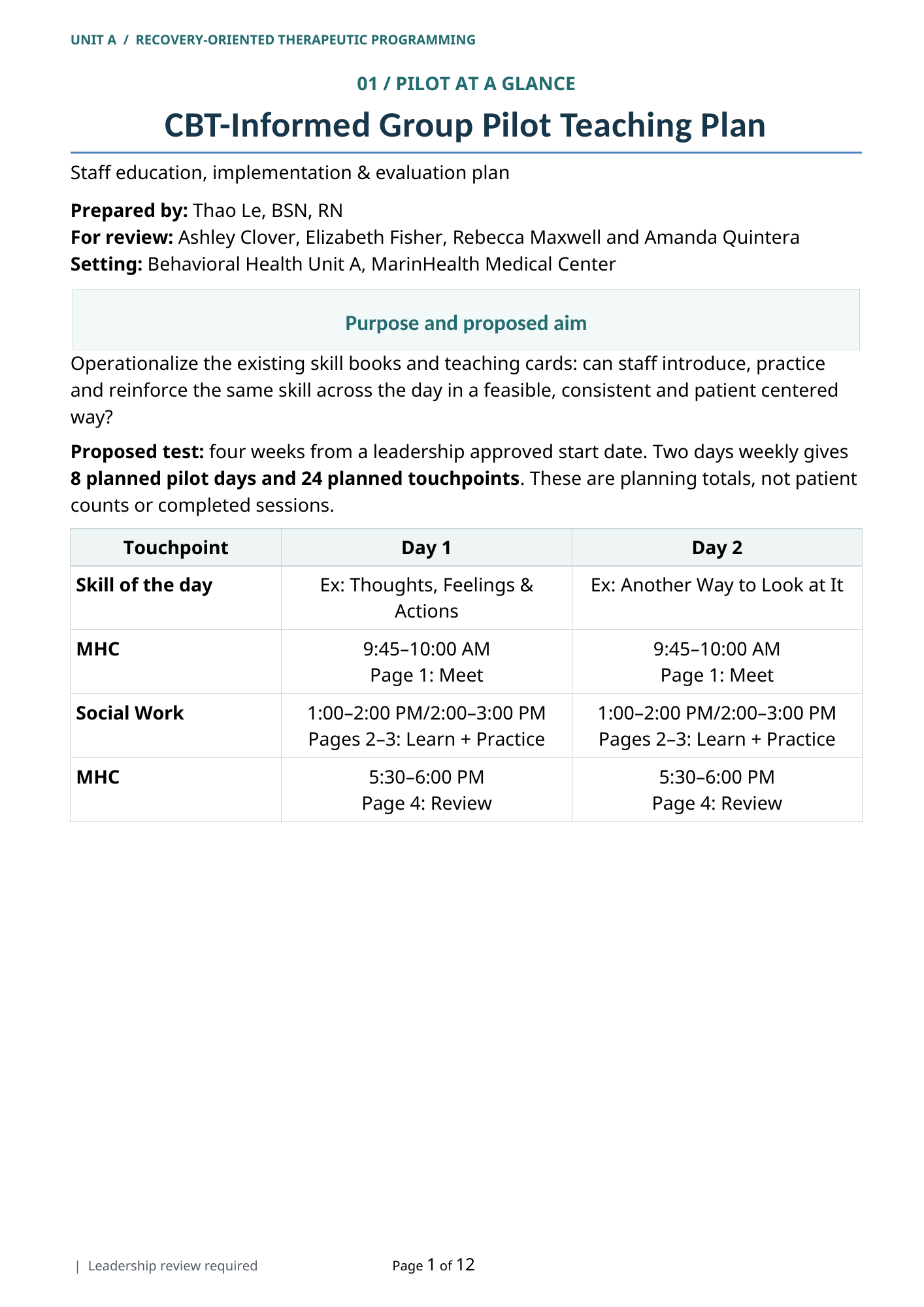
A 12-page proposal covering staff orientation, two sample patient teaching days, a readiness checklist, staff feedback, and a weekly delivery and learning log.

12 pages
First page of the CBT Group Teaching Plan
UNIT A · CBT-INFORMED RECOVERY SKILLS

CBT Group Teaching Plan

Prototype teaching plan · for leadership and interdisciplinary review. The document is presented as rendered pages for viewing within this portfolio.

STAFF TEACHING RESOURCE

Nurse Teaching Cards

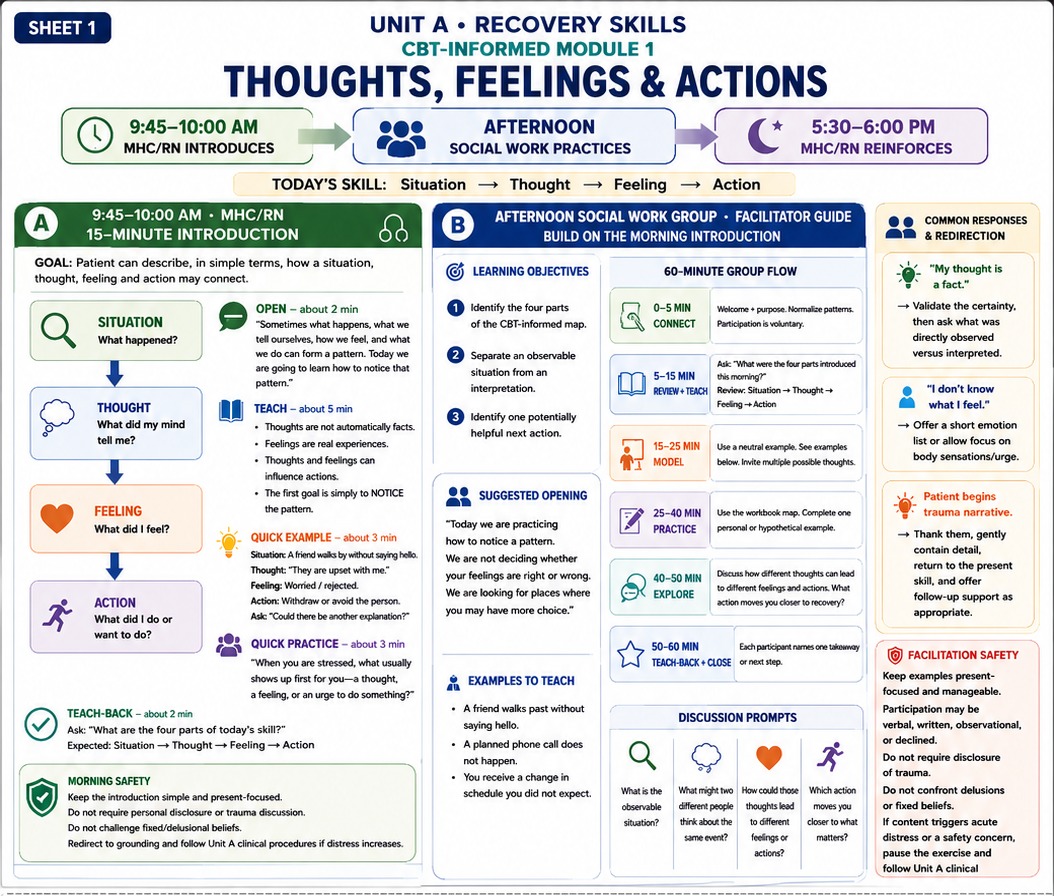
Matching visual guides for introducing, practicing, and reinforcing each recovery skill across the treatment day.

14 teaching sheets
Thoughts, Feelings & Actions Nurse Teaching Card previewSheet 1–2
Monday

Thoughts, Feelings & Actions

Notice how thoughts and feelings can influence what we do.

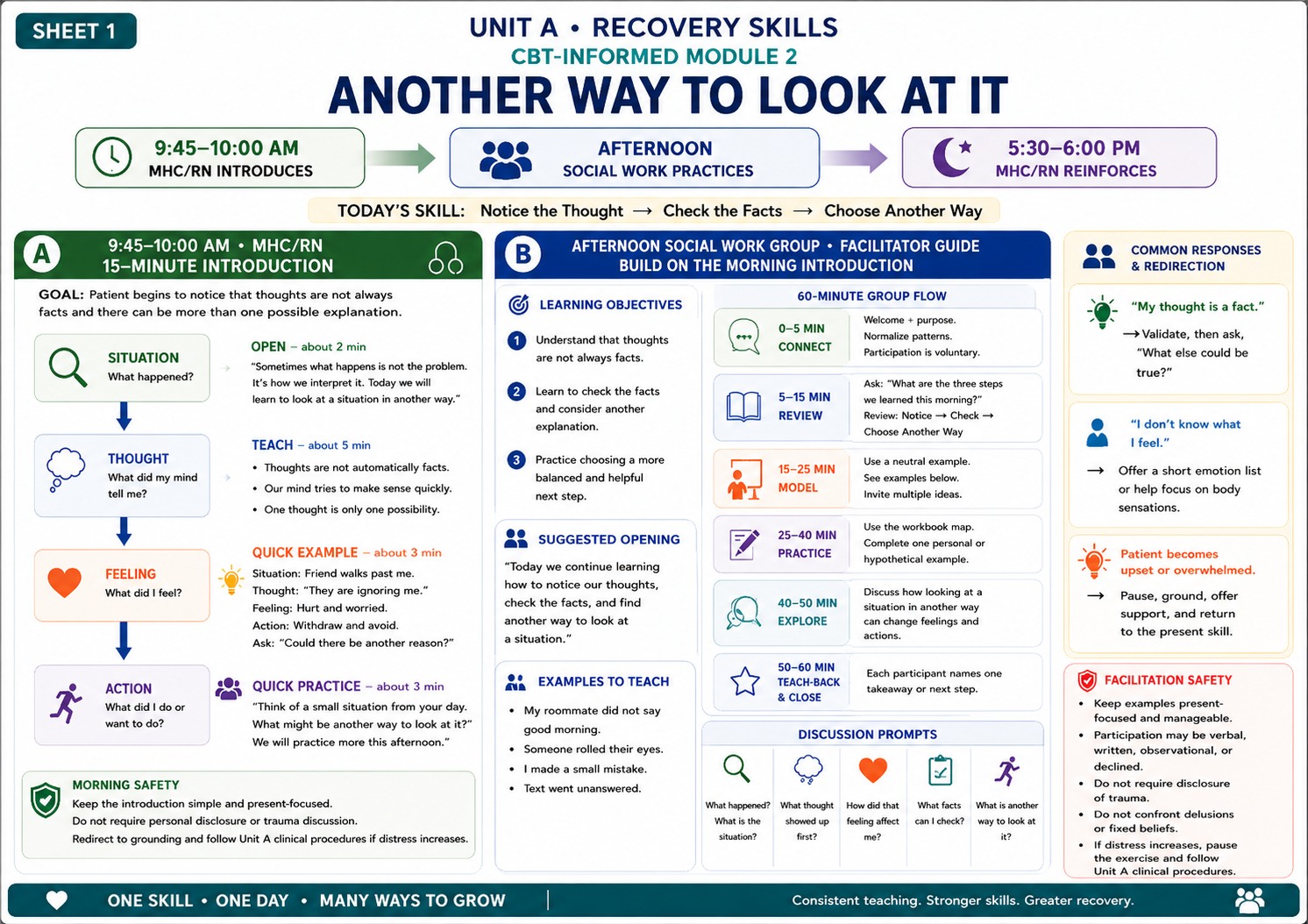
Another Way to Look at It Nurse Teaching Card previewSheet 1–2
Tuesday

Another Way to Look at It

Consider another explanation before reacting.

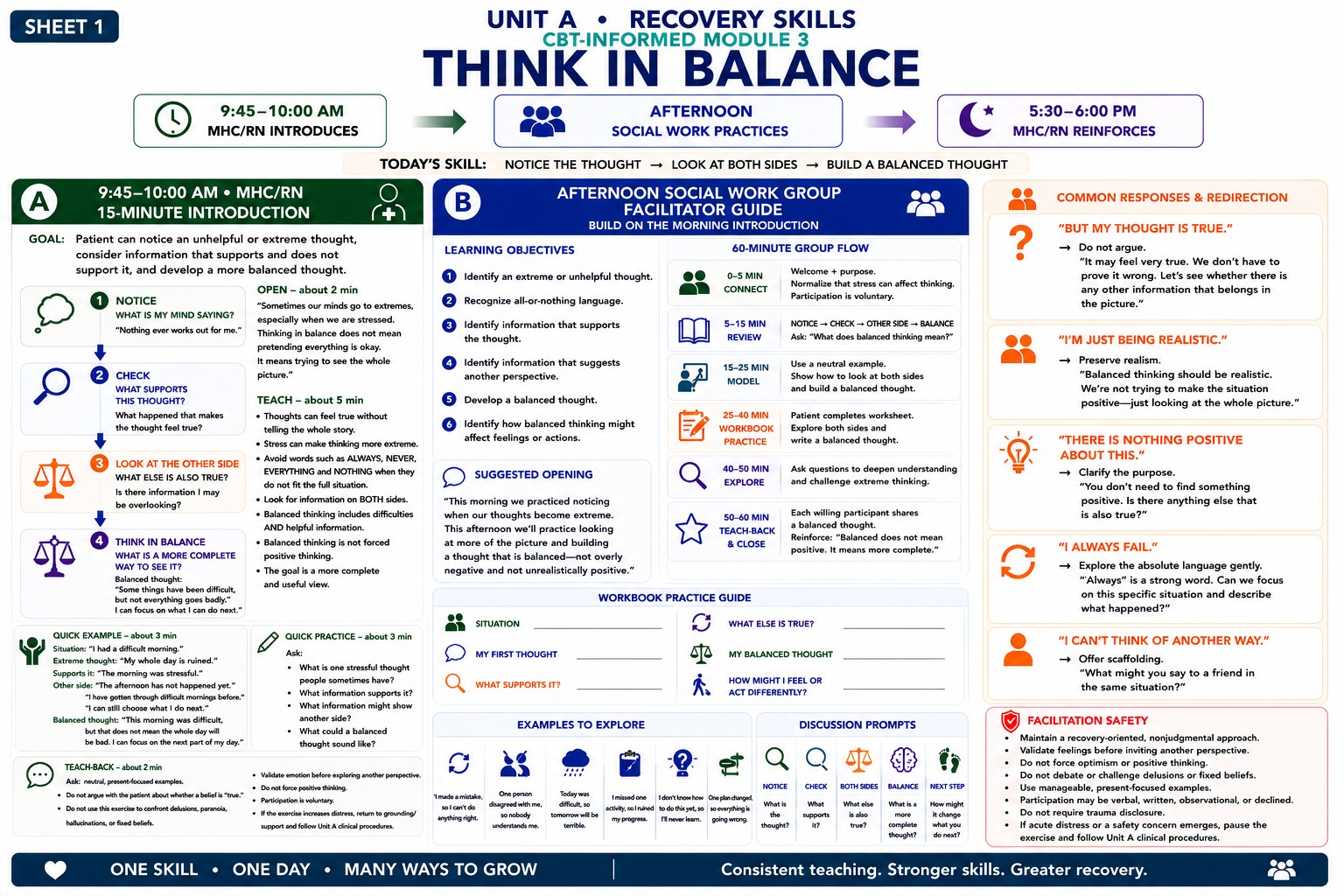
Think in Balance Nurse Teaching Card previewSheet 1–2
Wednesday

Think in Balance

Use facts and strengths to build a balanced view.

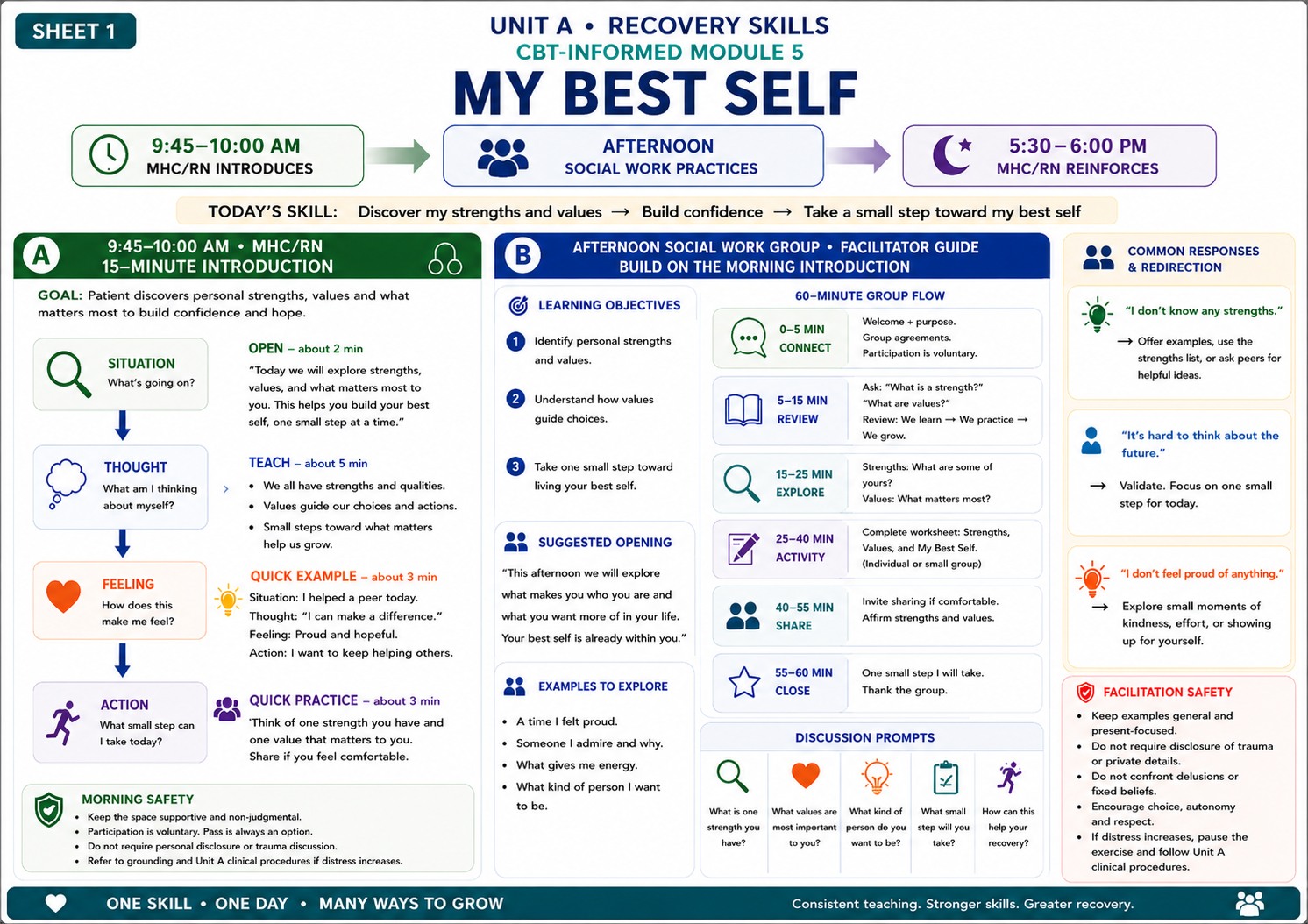
My Best Self Nurse Teaching Card previewSheet 1–2
Thursday

My Best Self

Connect strengths and values with meaningful goals.

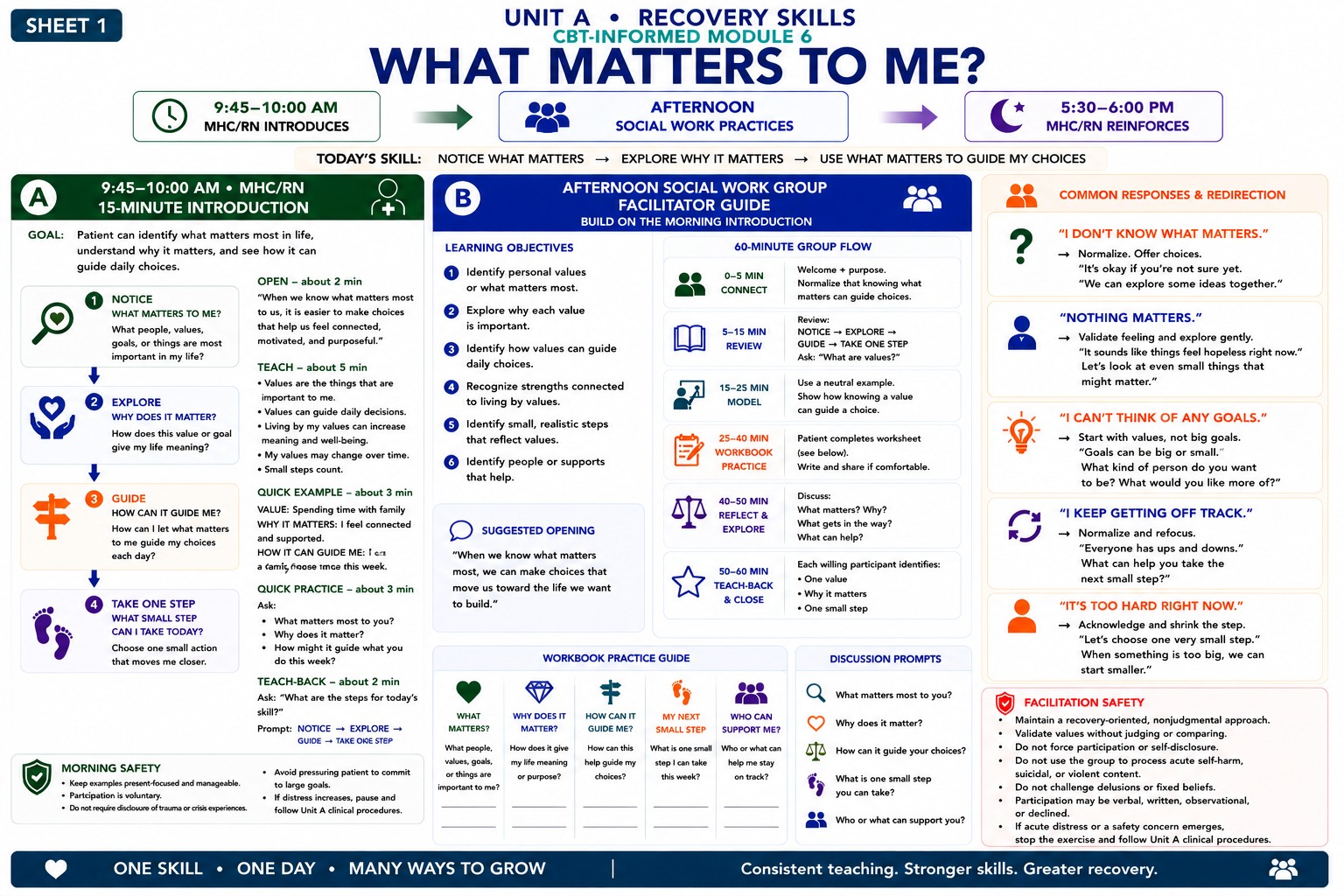
What Matters to Me? Nurse Teaching Card previewSheet 1–2
Friday

What Matters to Me?

Let values and priorities guide helpful choices.

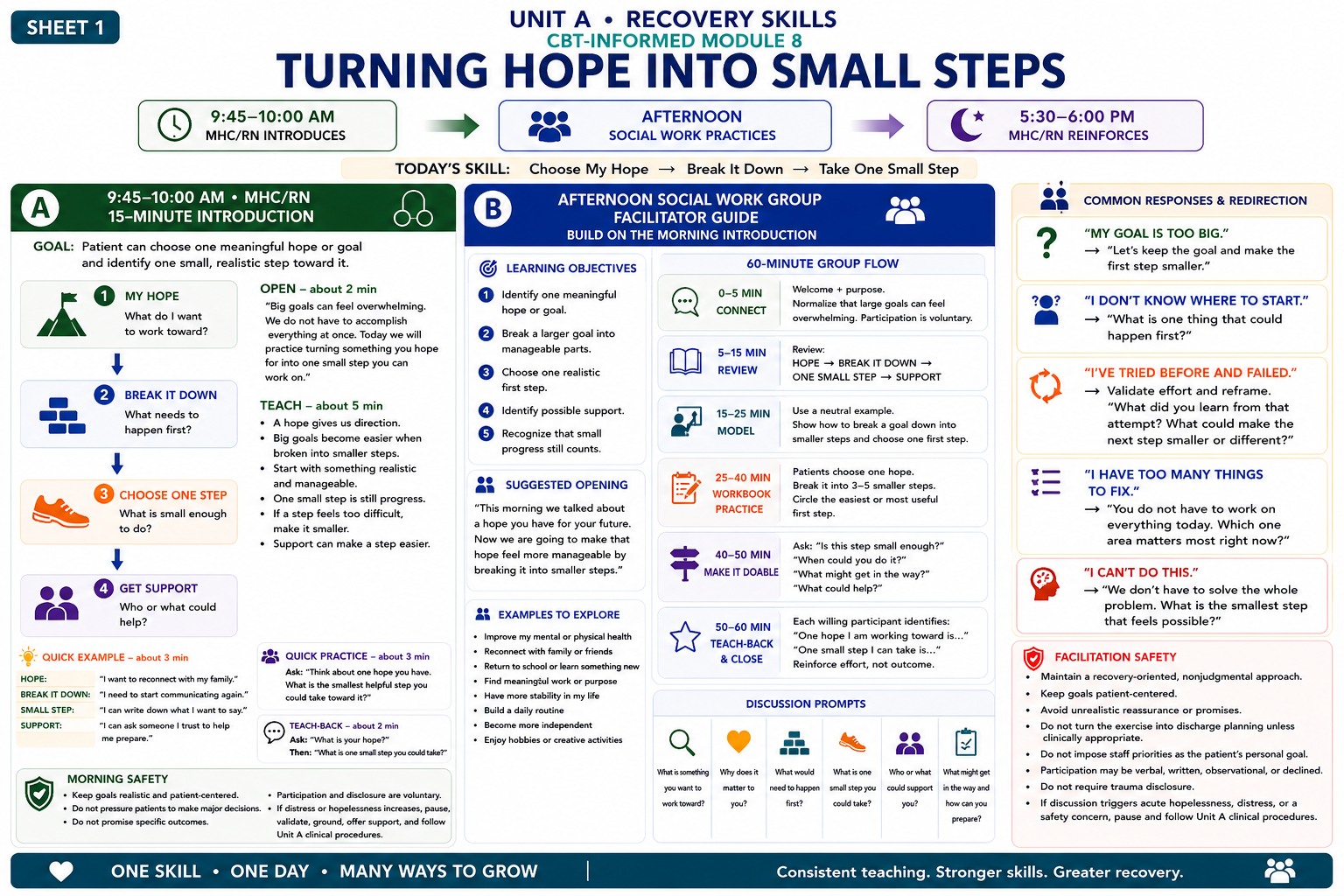
Turning Hope into Small Steps Nurse Teaching Card previewSheet 1–2
Saturday

Turning Hope into Small Steps

Break a meaningful hope into manageable actions.

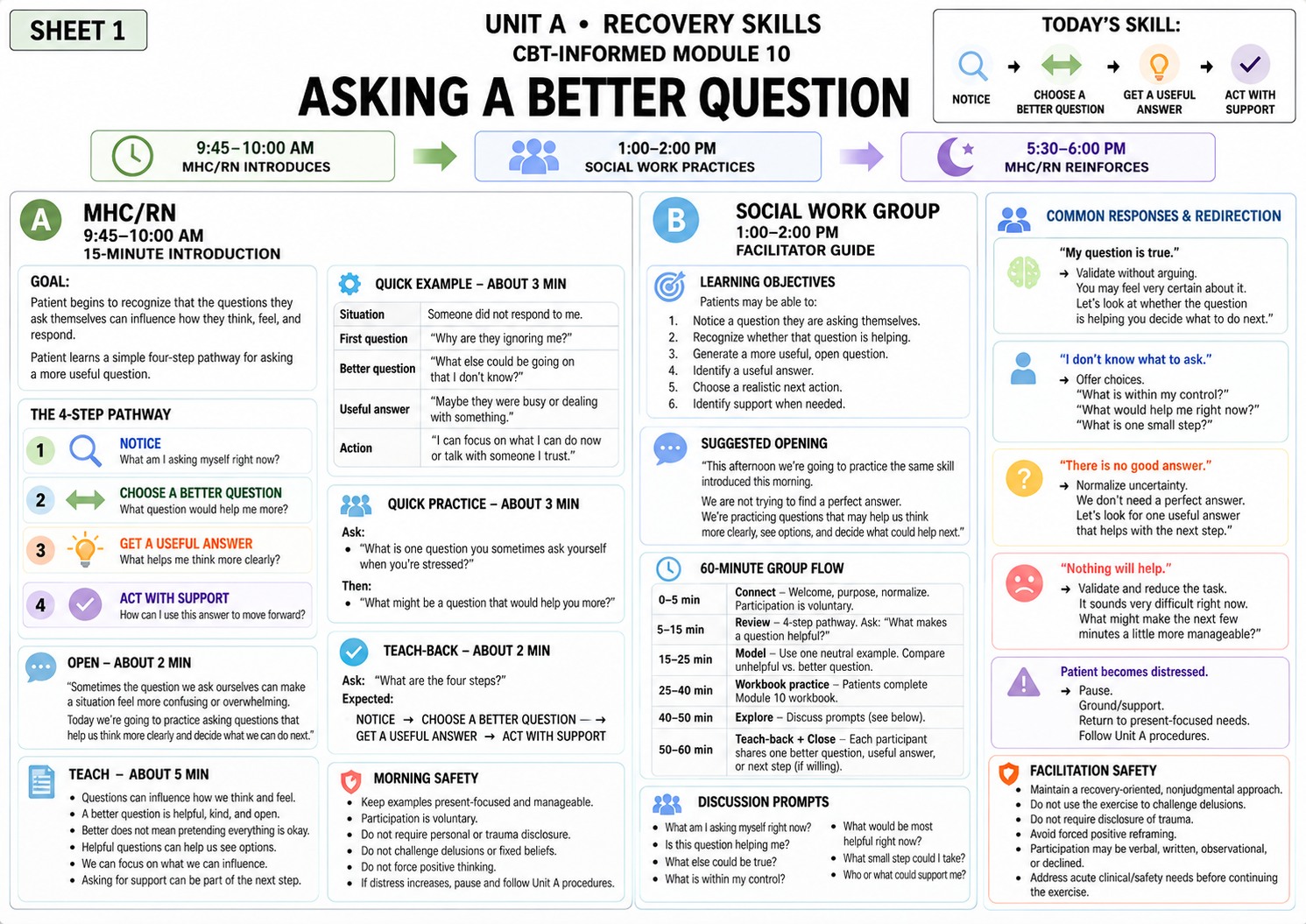
Asking a Better Question Nurse Teaching Card previewSheet 1–2
Sunday

Asking a Better Question

Use curiosity to find choices, answers, and support.

Portfolio review materials — view within this site.

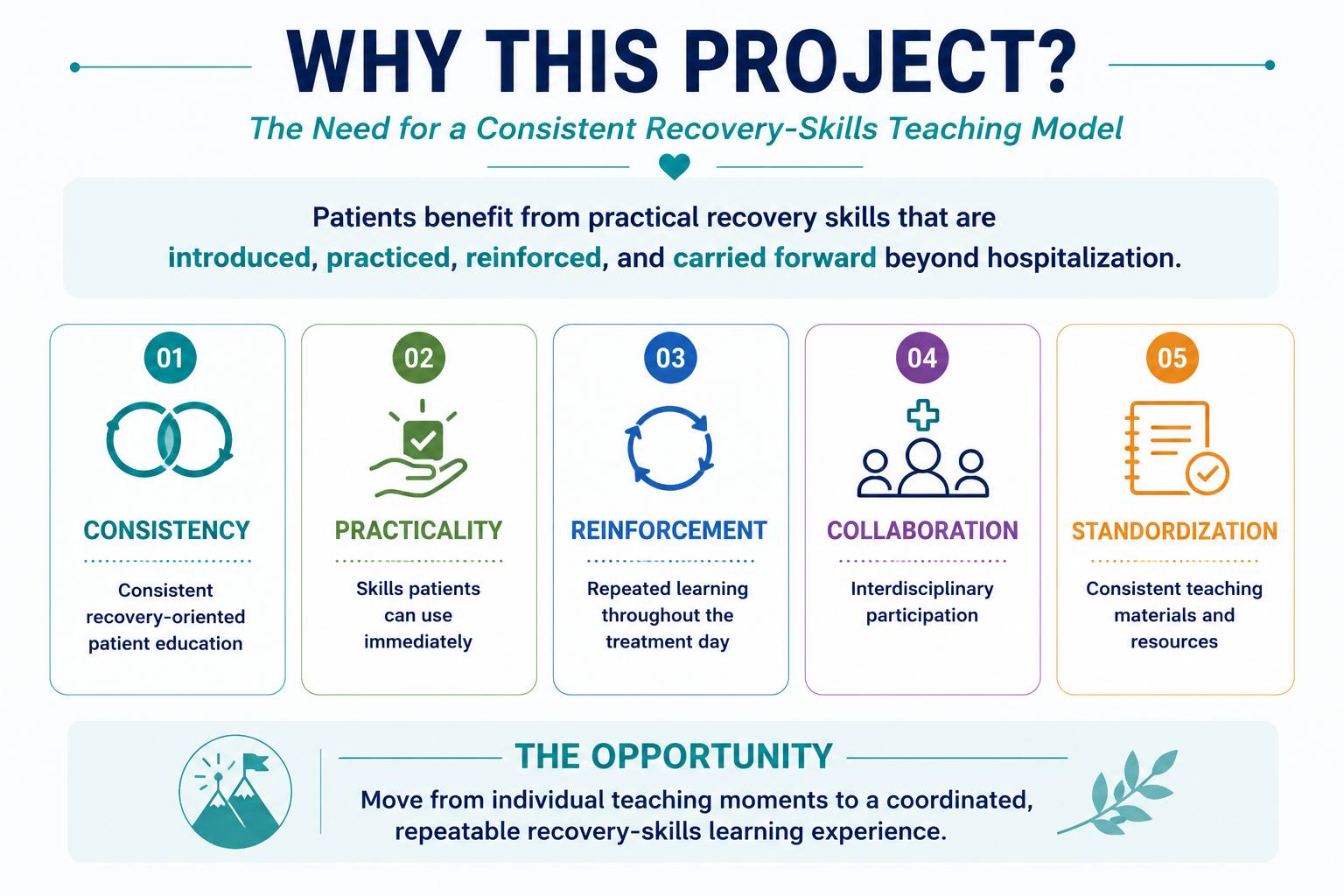
Why This Project?Clinical rationaleWhy This Project?

Defines the opportunity for consistent, practical, reinforced, interdisciplinary recovery-skills education.

Prepared for leadership reviewView full size ↗
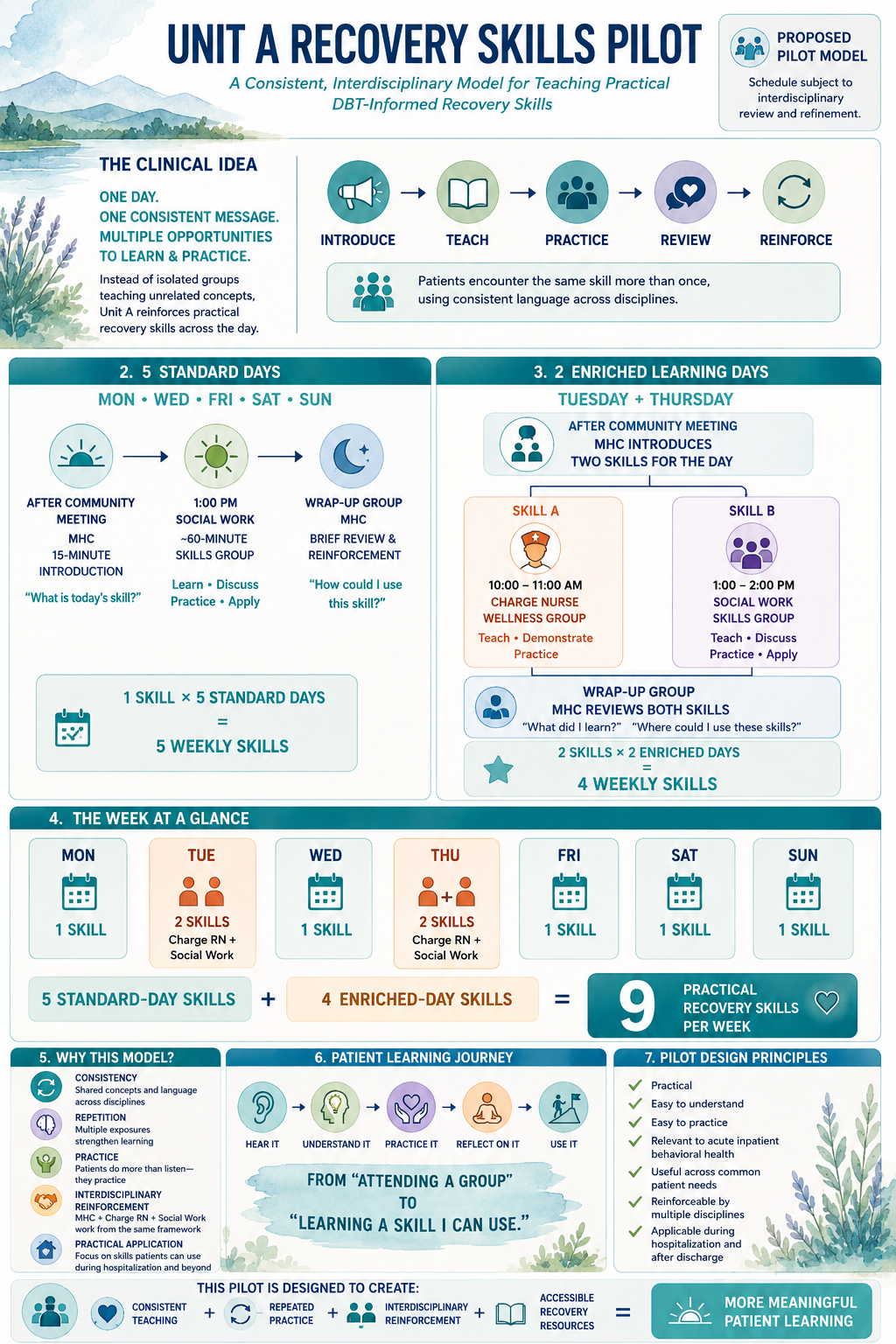
Unit A Recovery Skills PilotPilot designUnit A Recovery Skills Pilot

A detailed proposed weekly model with standard and enriched learning days, interdisciplinary touchpoints, and pilot design principles.

Proposed pilot modelView full size ↗
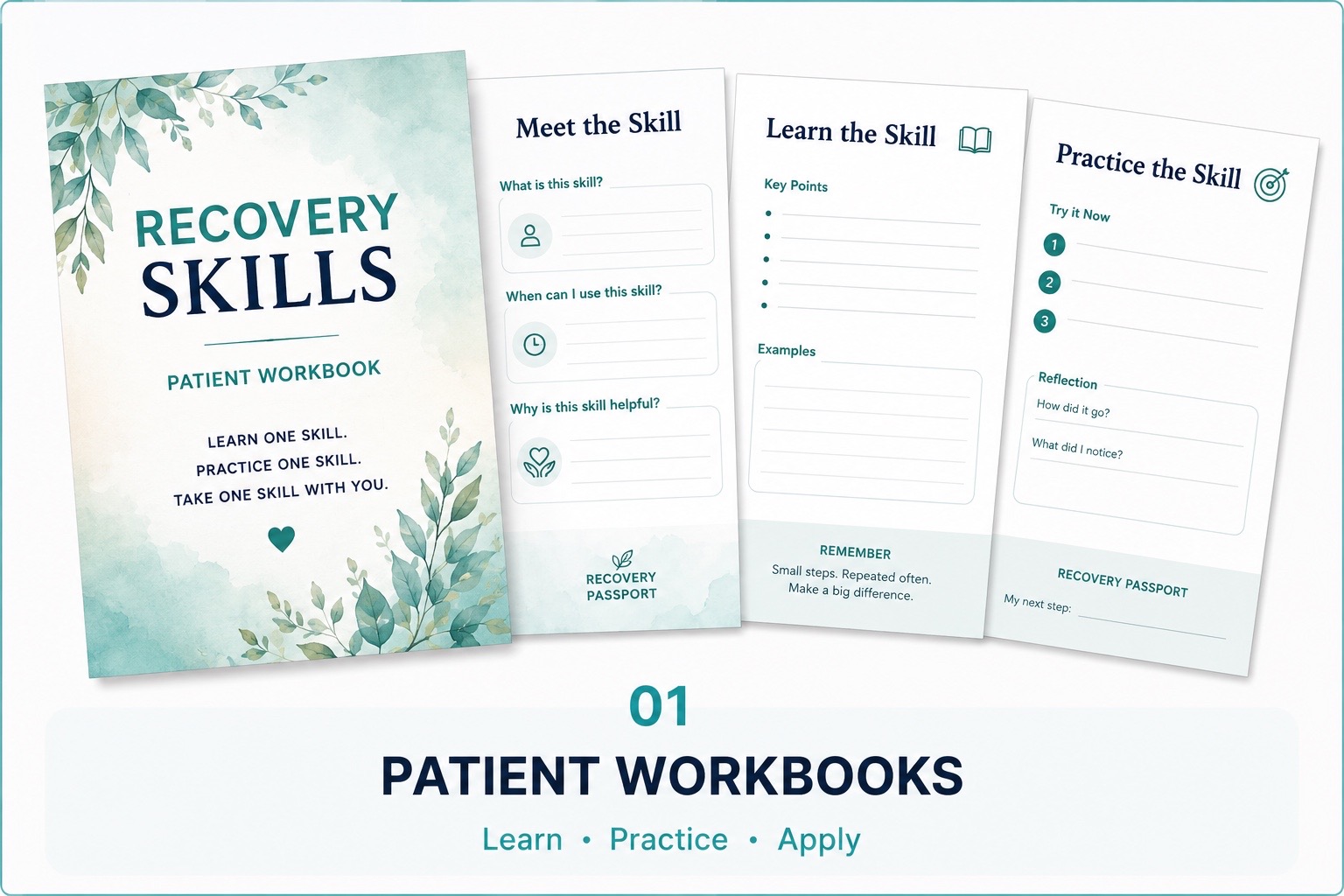
Infographic-Style Patient WorkbooksPatient resourceInfographic-Style Patient Workbooks

A visual system designed to help patients meet, learn, practice, reflect on, and carry forward one recovery skill.

Prototype materialsView full size ↗
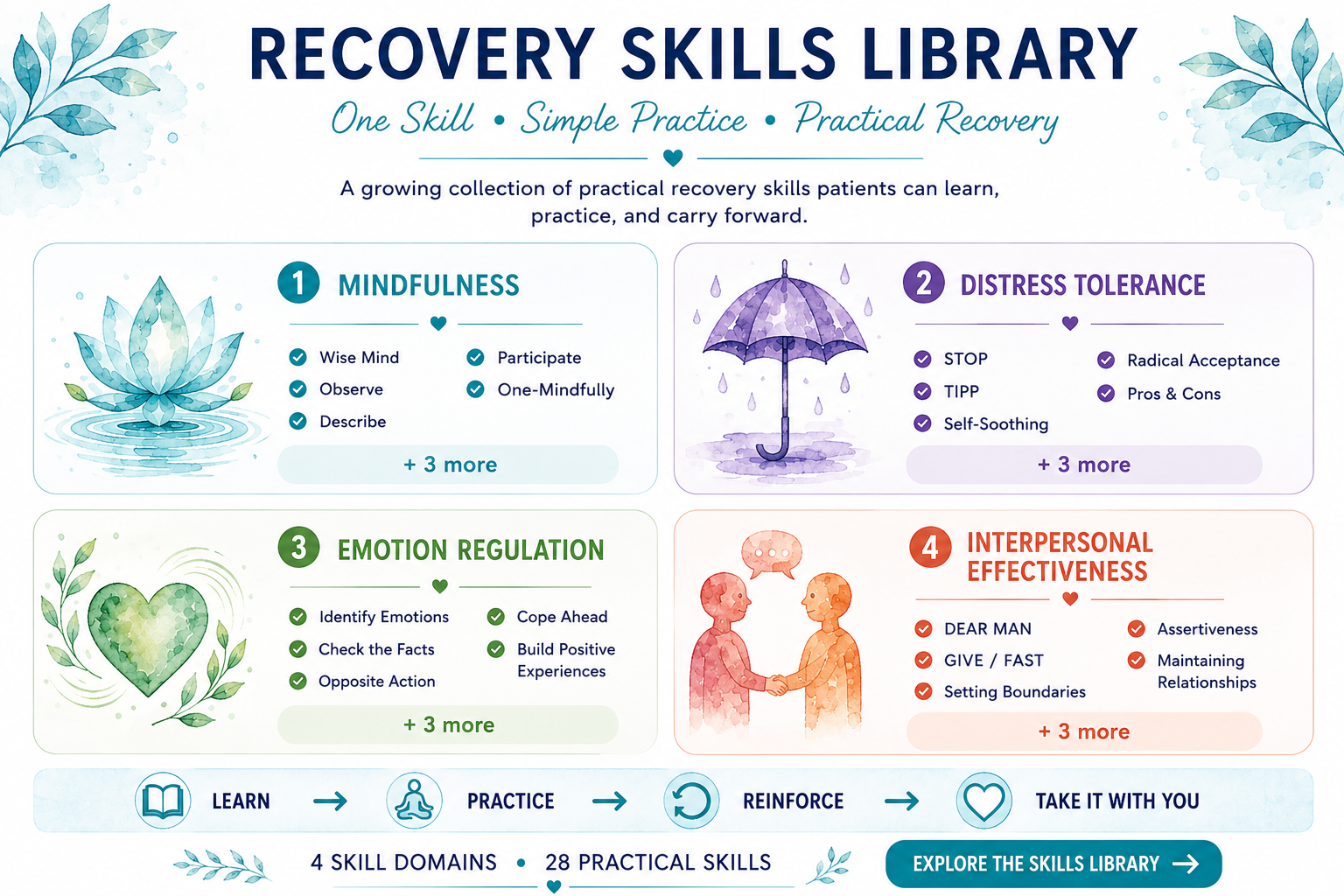
Recovery Skills LibraryCurriculum mapRecovery Skills Library

Organizes selected skills across mindfulness, distress tolerance, emotion regulation, and interpersonal effectiveness.

Draft curriculum libraryView full size ↗
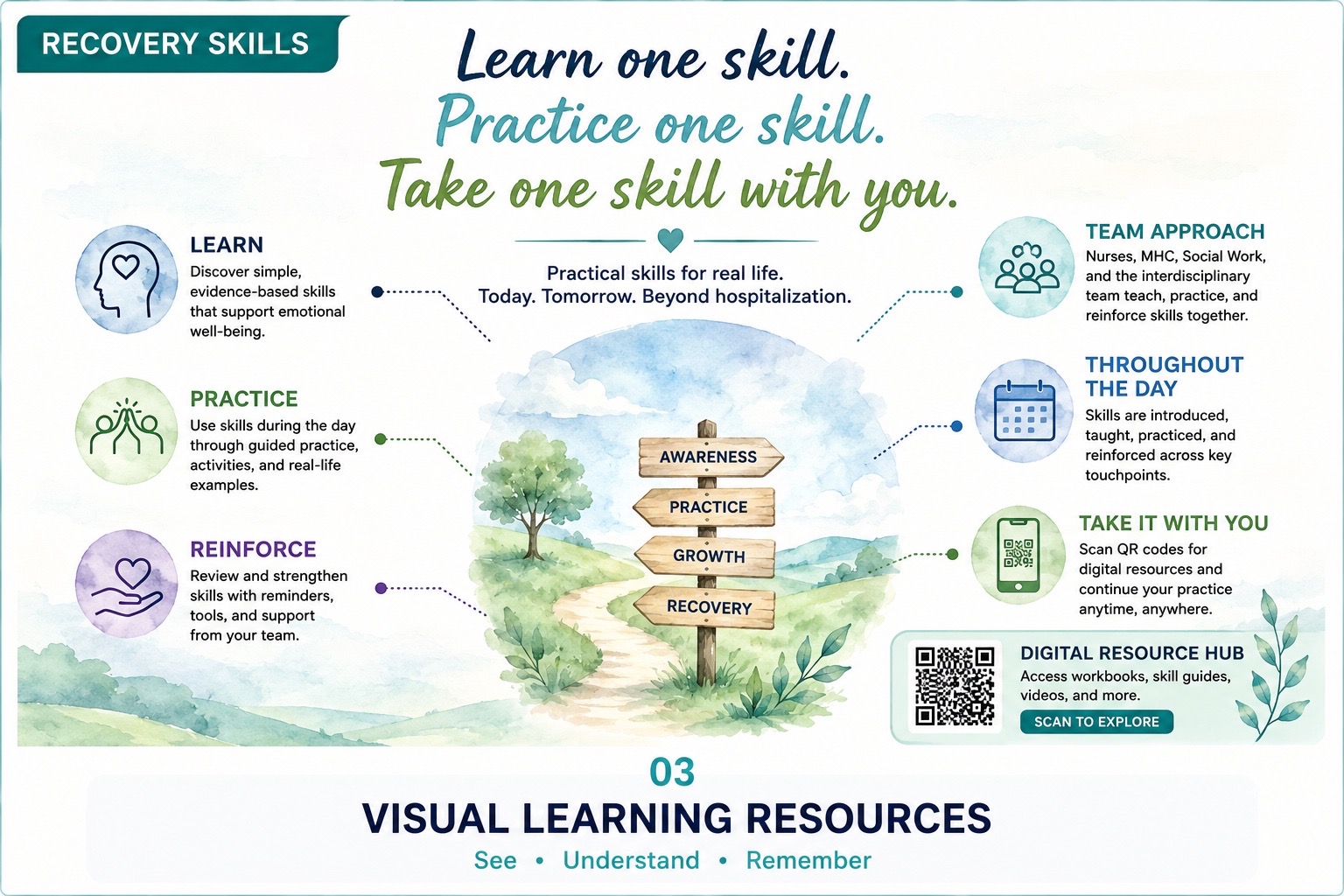
Visual Learning ResourcesLearning supportsVisual Learning Resources

Shows how workbooks, visual teaching resources, interdisciplinary reinforcement, and the digital resource hub support continued practice.

Prototype resource systemView full size ↗
Digital resourceUnit A Recovery Skills Learning Hub

Patient-facing recovery education and skill resources supporting individualized review and continued practice.

Prototype resourceOpen Learning Hub ↗
Pilot prototype · 65 pagesRecovery Skills Academy — Unit A Pilot Binder

Ten lesson dividers, 40 patient workbook pages, 10 matching Nurse Teaching Cards, and staff-use guidance.

Pilot prototypeOpen PDF ↗
Final draft · 35 pagesUnit A Recovery Skills Workbook

Ten Nurse Teaching Cards, 10 patient Learn pages, 10 patient Practice pages, and five companion resources.

Pending leadership reviewOpen PDF ↗
Quality review · 5 pagesRevision Log & Coverage Audit

Documents revisions, lesson coverage, identified gaps, prioritized companion resources, and review readiness.

Pending leadership reviewOpen PDF ↗
Governance tool · 3 pagesLeadership Review Checklist

Structured review of clinical content, workflow, accessibility, implementation readiness, and approval considerations.

Awaiting leadership reviewOpen PDF ↗

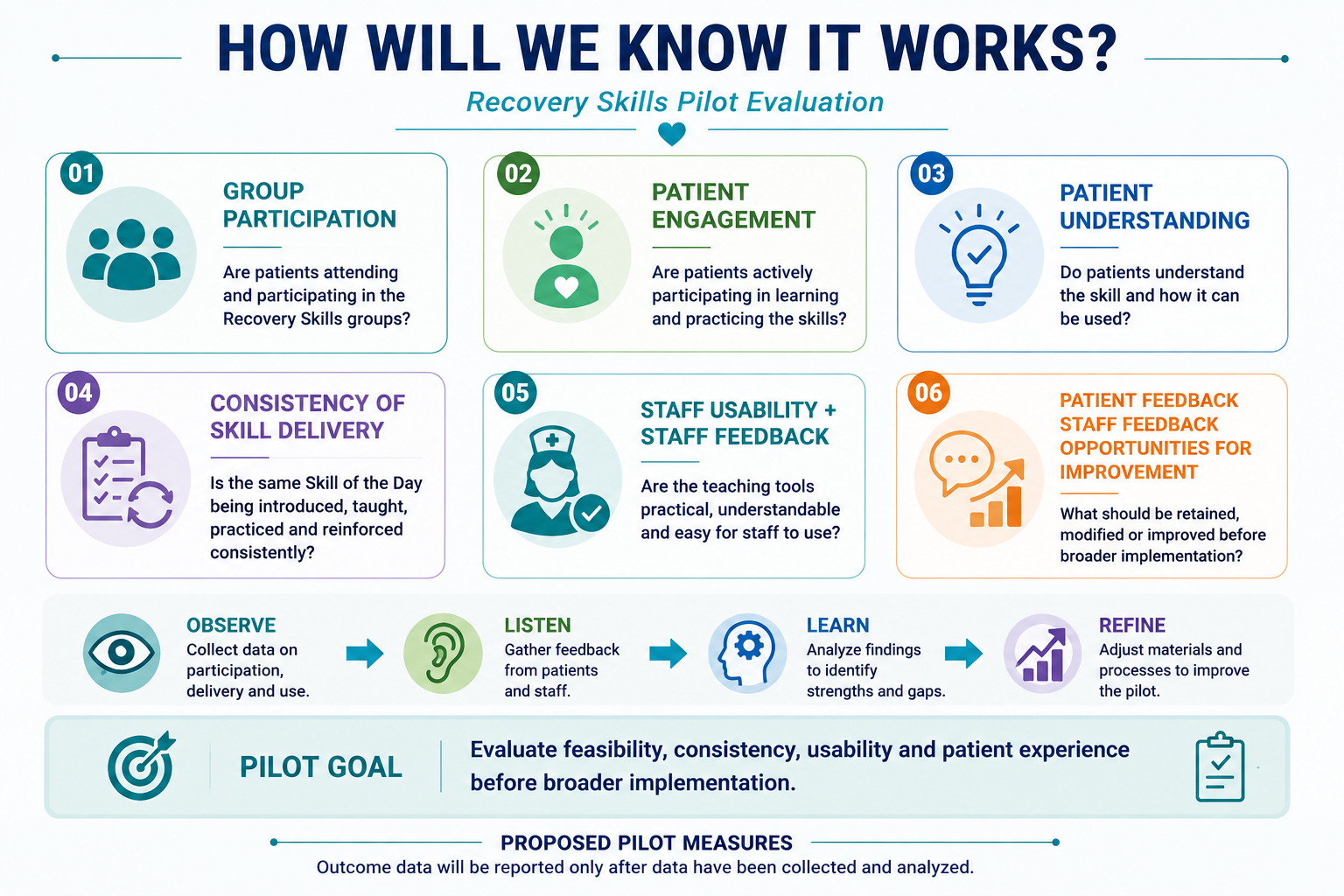
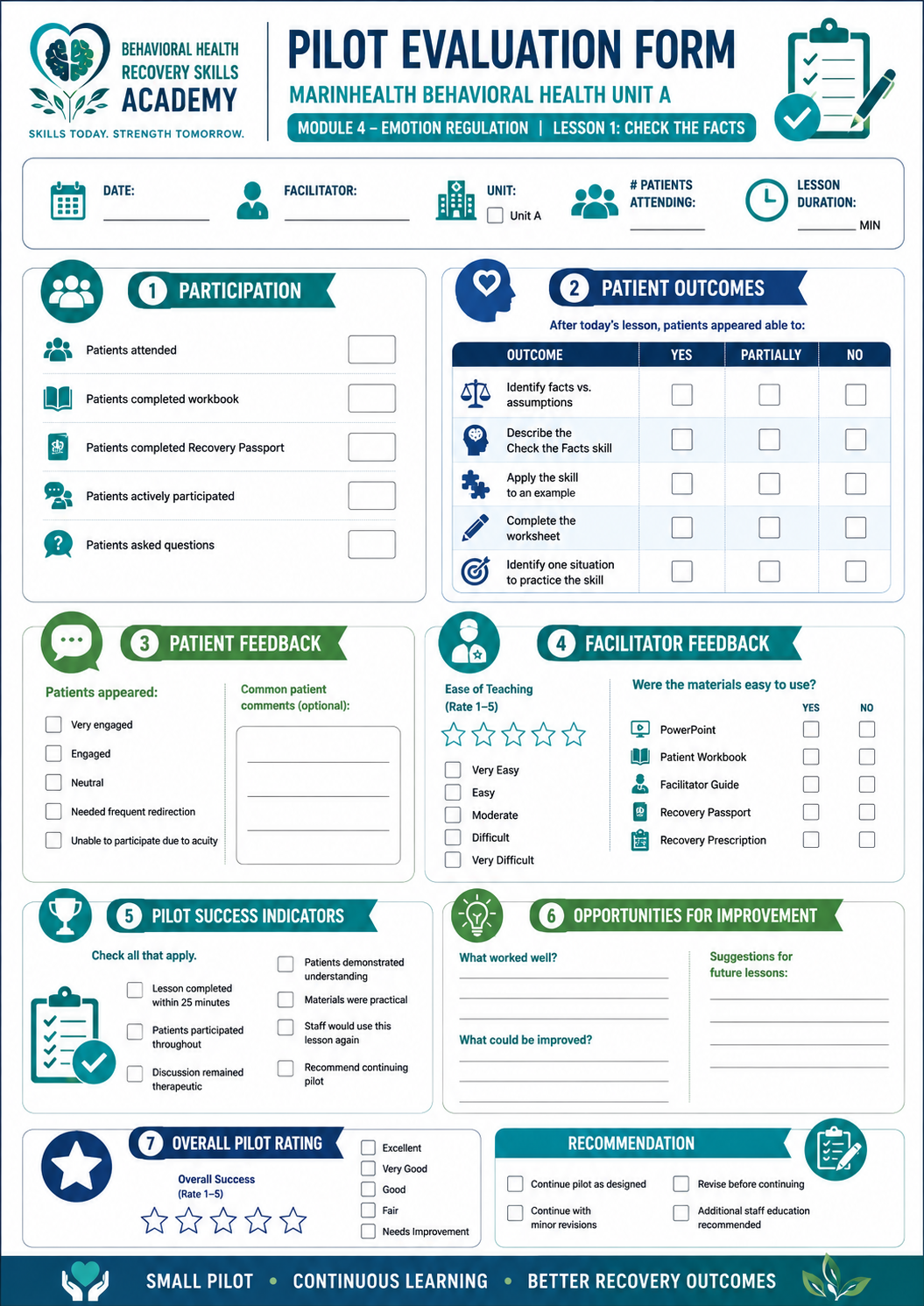
Measure before claiming impact.

The proposed framework asks whether patients participate, engage, understand the skill, and receive the same skill consistently; it also gathers feedback on staff usability and opportunities for improvement.

Accuracy standard

No participation rates, patient outcomes, staff ratings, time savings, or implementation results are reported because pilot data have not been collected and analyzed.

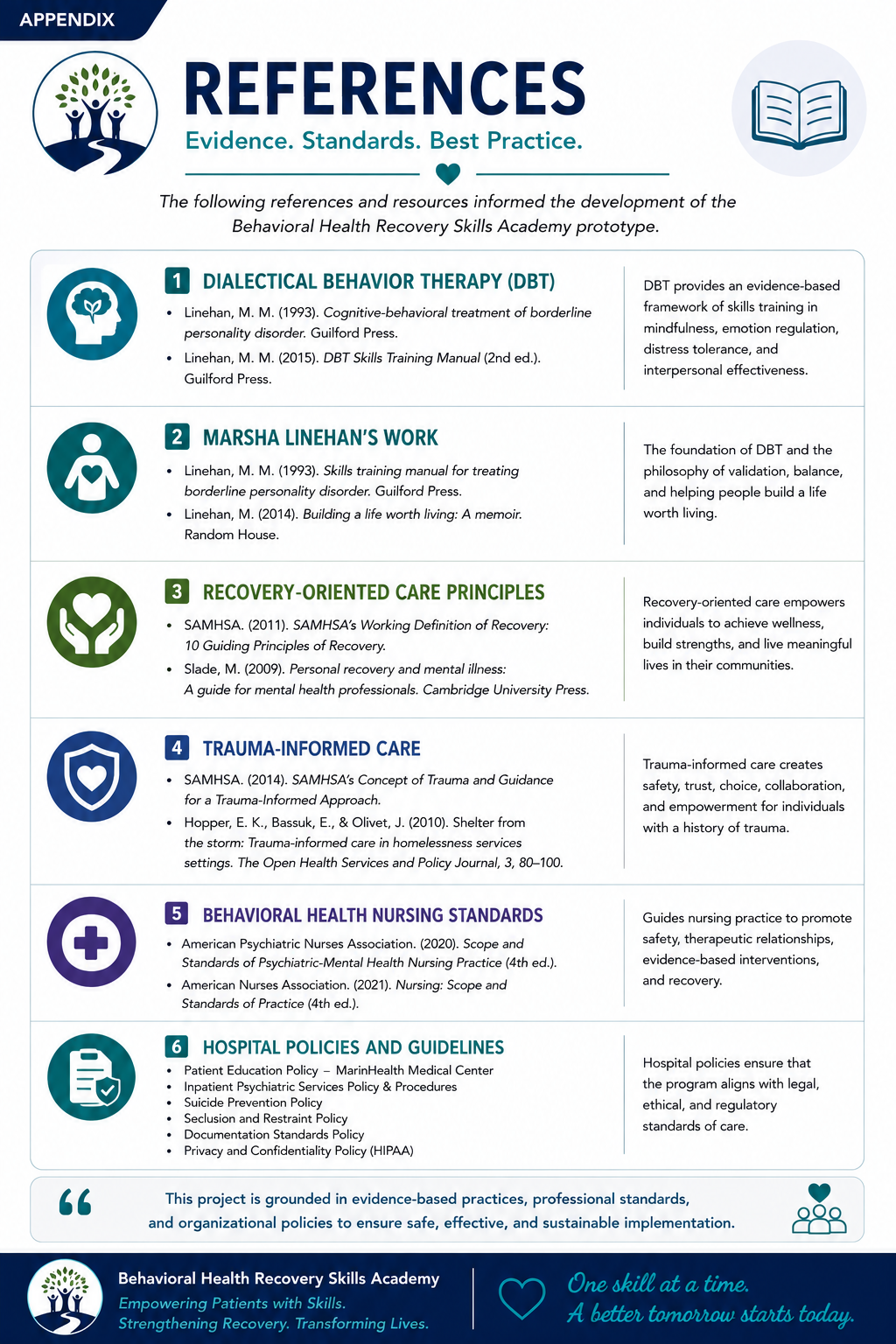
References & Recovery Skills FrameworkEvidence frameworkReferences & Recovery Skills Framework

Summarizes draft DBT, recovery-oriented care, trauma-informed care, nursing standards, and organizational-policy references supporting the prototype.

Citations and policies require final verificationView full size ↗
Governance statementMaterials Presented for Review

Organizational branding visible within source artifacts identifies the intended review context. It does not indicate approval, adoption, or implementation. Clinical content, schedule design, staff roles, citations, and policy references remain subject to appropriate review.

Private reviewer portfolio

The current portfolio materials and prototype resource system are complete for leadership and interdisciplinary review.

Outcome measurement pending

“Completed” describes these review materials. Clinical and policy review, approval, and any pilot implementation remain pending. No organizational endorsement or verified clinical or operational result is claimed.

  • Review the proposed calendar with the Director, nursing staff, Mental Health Counselors, Social Work, and the interdisciplinary treatment team.
  • Revise group names, times, role assignments, and weekly sequencing according to patient and staff needs.
  • Complete clinical, policy, accessibility, and citation review of the curriculum and supporting materials.
  • Define a limited pilot scope, staff preparation plan, and baseline measures before implementation.
  • Collect and analyze pilot feedback before reporting outcomes or considering broader implementation.